
1. Why pharmaceutical applications demand a different approach
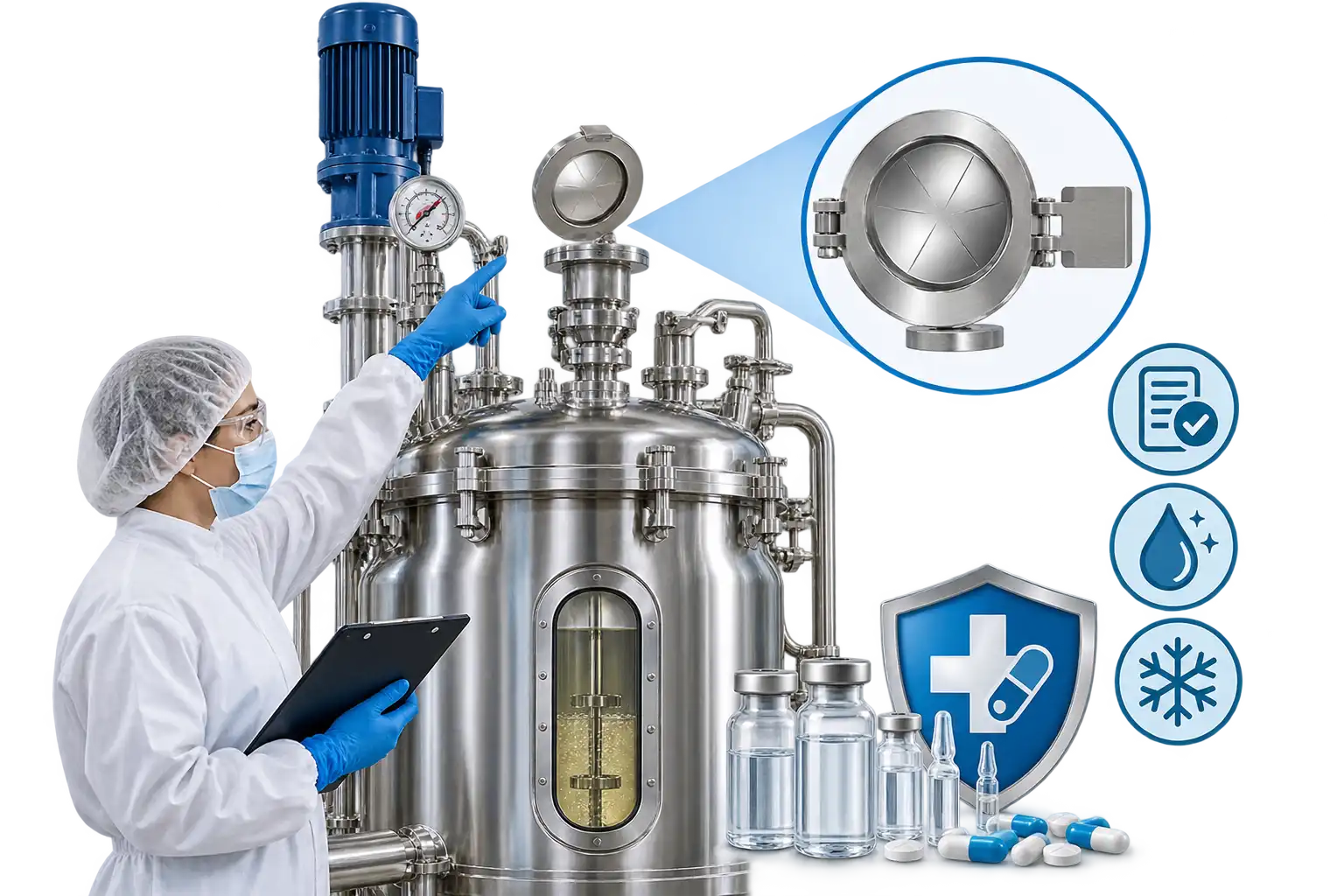
Selecting a rupture disc for a chemical plant and selecting one for a European GMP pharmaceutical facility are fundamentally different exercises. In chemical manufacturing, you primarily optimise for pressure tolerance, material compatibility, and cost. In pharma, you add five additional layers of complexity: regulatory certification, hygienic design, cleanability, sterility assurance, and zero-fragment burst behaviour.
A rupture disc failure in a pharmaceutical bioreactor does not just risk equipment damage — it can contaminate an entire production batch, trigger an EU GMP deviation report, invite EMA inspection, and — if a fragment enters the process stream — cause a product recall across multiple European markets.
The pressure relief challenge in pharma is also unique in that processes swing between overpressure and vacuum. A bioreactor undergoing CIP (clean-in-place) steam sterilisation followed by rapid cooling can generate significant vacuum conditions. A rupture disc that is not vacuum-rated or not CIP/SIP-compatible will either fail prematurely or crack — both constituting a batch loss event.
2. EU regulatory framework: standards every buyer must know
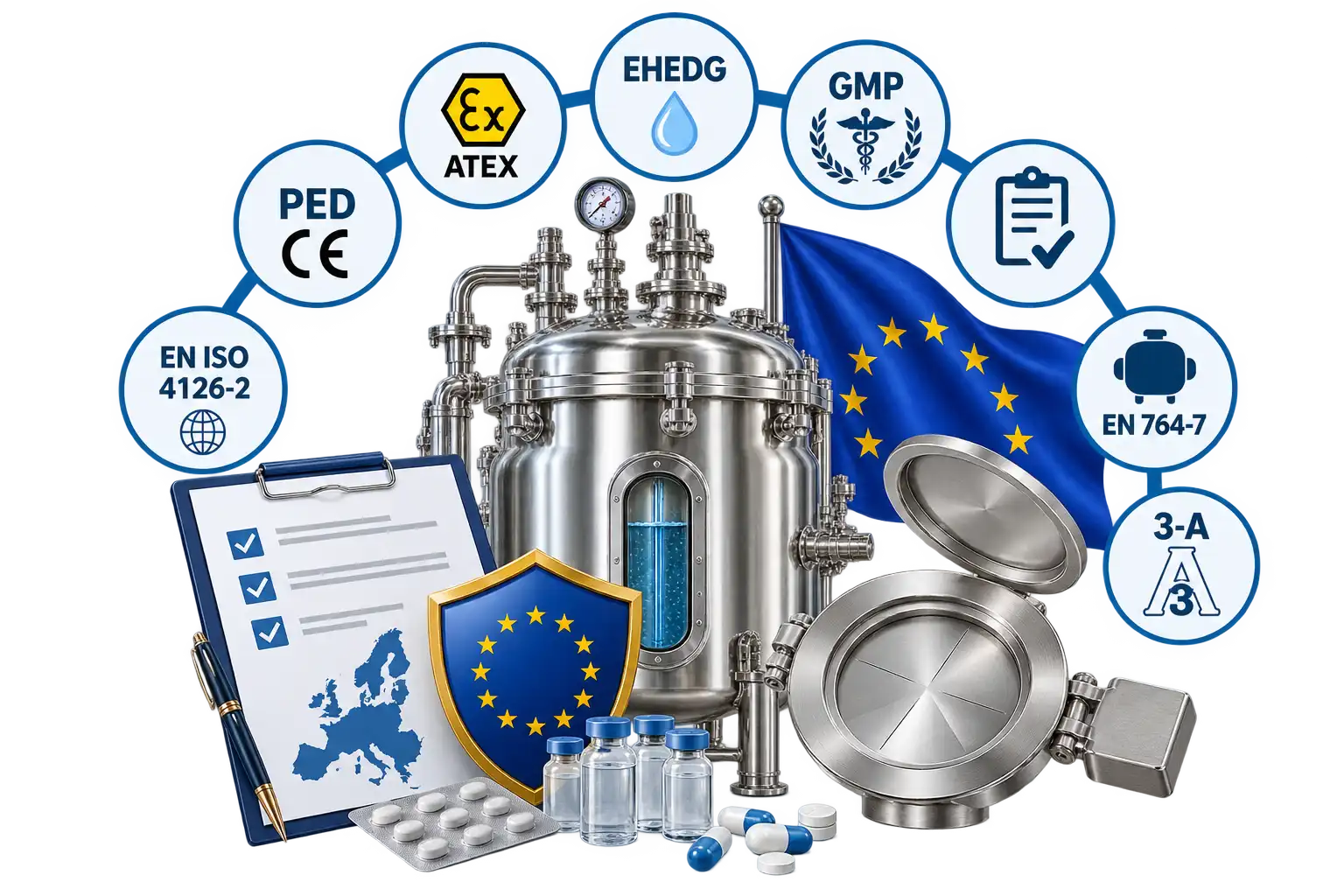
| Standard / Directive | Scope | Applies to pharma? |
|---|---|---|
| EN ISO 4126-2:2018 | Bursting disc safety devices — design, testing, marking, and documentation | ✔ Mandatory |
| PED 2014/68/EU | Pressure Equipment Directive — CE marking for pressure vessels and safety accessories above category I | ✔ Mandatory |
| ATEX 2014/34/EU | Explosion-proof equipment for hazardous zones (solvent-based pharma, API synthesis) | ◑ If ATEX zone |
| EHEDG EL Class I | European Hygienic Engineering & Design Group — cleanability and sterility certification | ✔ Best practice / required by many EU pharma QA teams |
| EU GMP Annex 1 (2022) | Sterile medicinal products — contamination control strategy; all utilities and equipment qualify | ✔ Mandatory for sterile mfg. |
| EU GMP Annex 15 | Qualification and validation — all equipment including pressure relief devices | ✔ Mandatory |
| EN 764-7 | Safety systems for unfired pressure vessels | ◑ Relevant for vessel design |
| 3-A Sanitary Standards | North American hygiene standard — referenced by some EU buyers for US-market dual compliance | ◑ Optional |
3. Types of rupture discs — which design suits pharma?
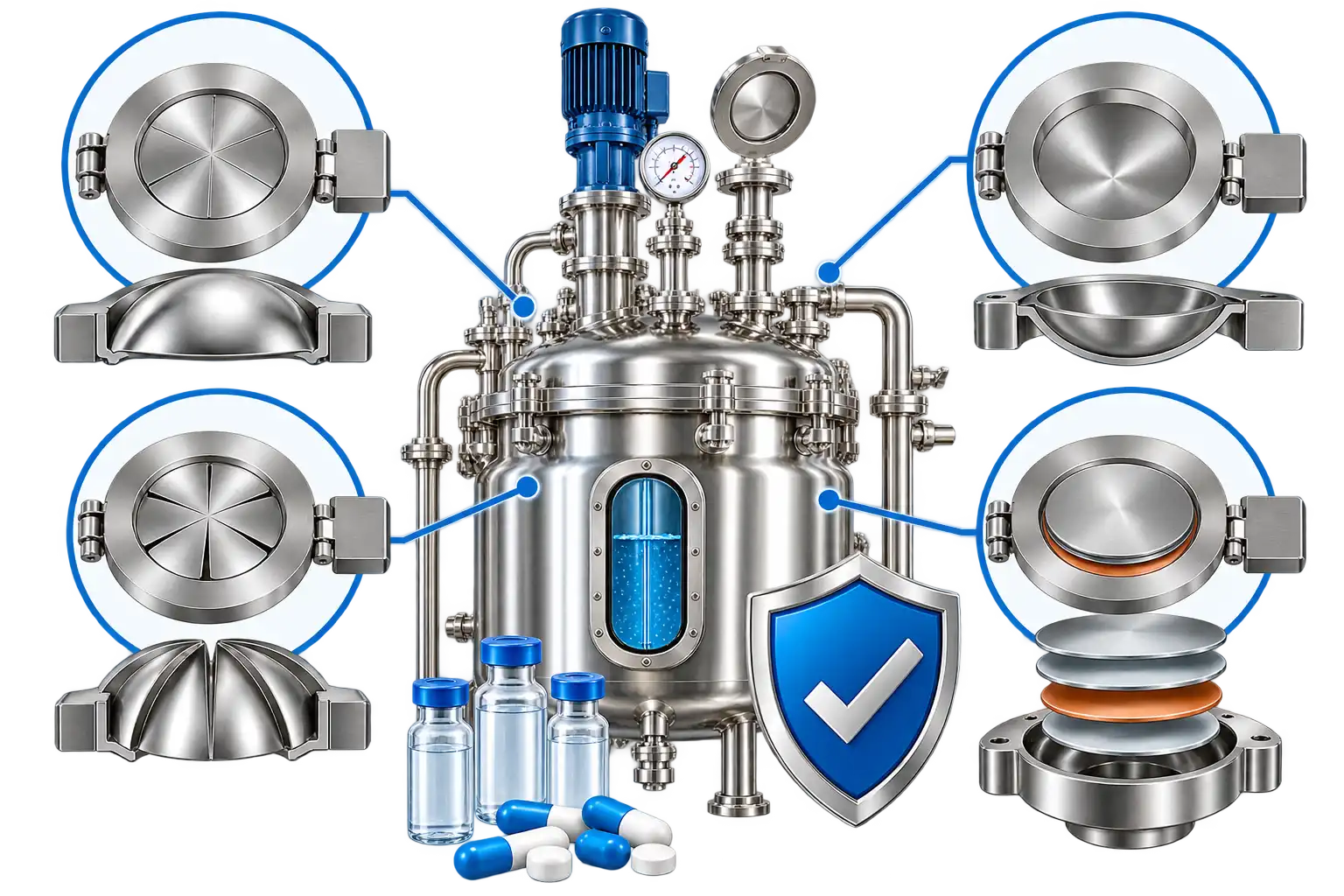
Not all rupture discs are equal. The three primary types differ in burst mechanism, fragment risk, and suitability for pharmaceutical CIP/SIP cycles:
- Dome faces process pressure (convex side)
- Lower operating ratio (~70–80% of burst pressure)
- Risk of fragment generation on burst
- Less suitable for vacuum service
- Pharma use: Limited — acceptable only with downstream fragment trap
- Dome faces away from process pressure (concave side)
- High operating ratio (90–100% of burst pressure in EU)
- Non-fragmenting or minimal fragment risk
- Excellent vacuum resistance
- Pharma use: ✔ Preferred for EU GMP bioreactors and reactors
- Score lines control burst pattern for predictable opening
- Petal or cross-opening — minimal fragment generation
- CIP/SIP compatible when electro-polished
- Pharma use: ✔ Widely used in sterile and API production
- Multiple layers for wider operating range
- Suitable for corrosive media with liner material
- Higher cost but greater application flexibility
- Pharma use: ✔ Suitable for corrosive API solvents
4. Seven key selection criteria for pharmaceutical applications
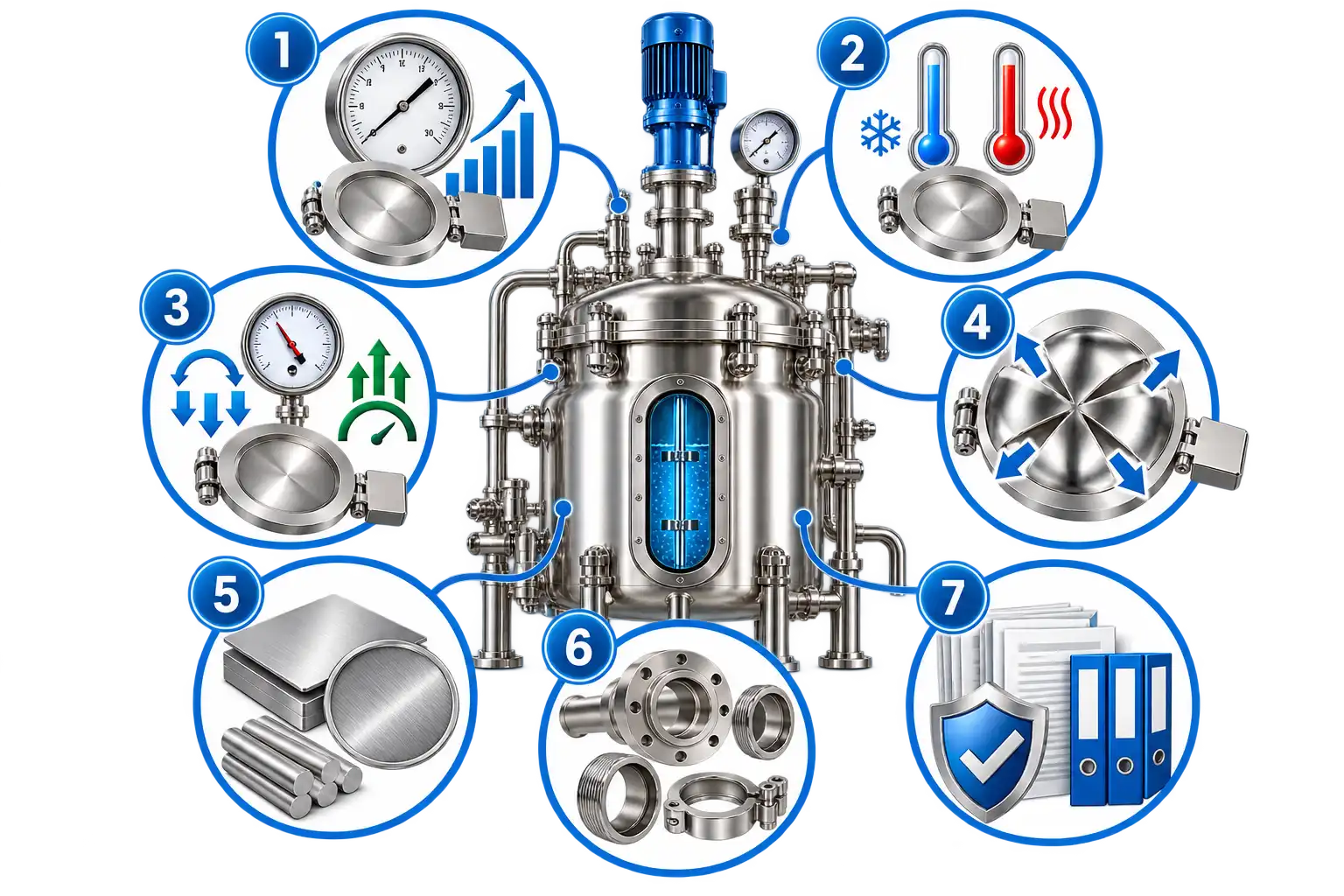
5. Material selection: 316L, Hastelloy, and the critical surface finish
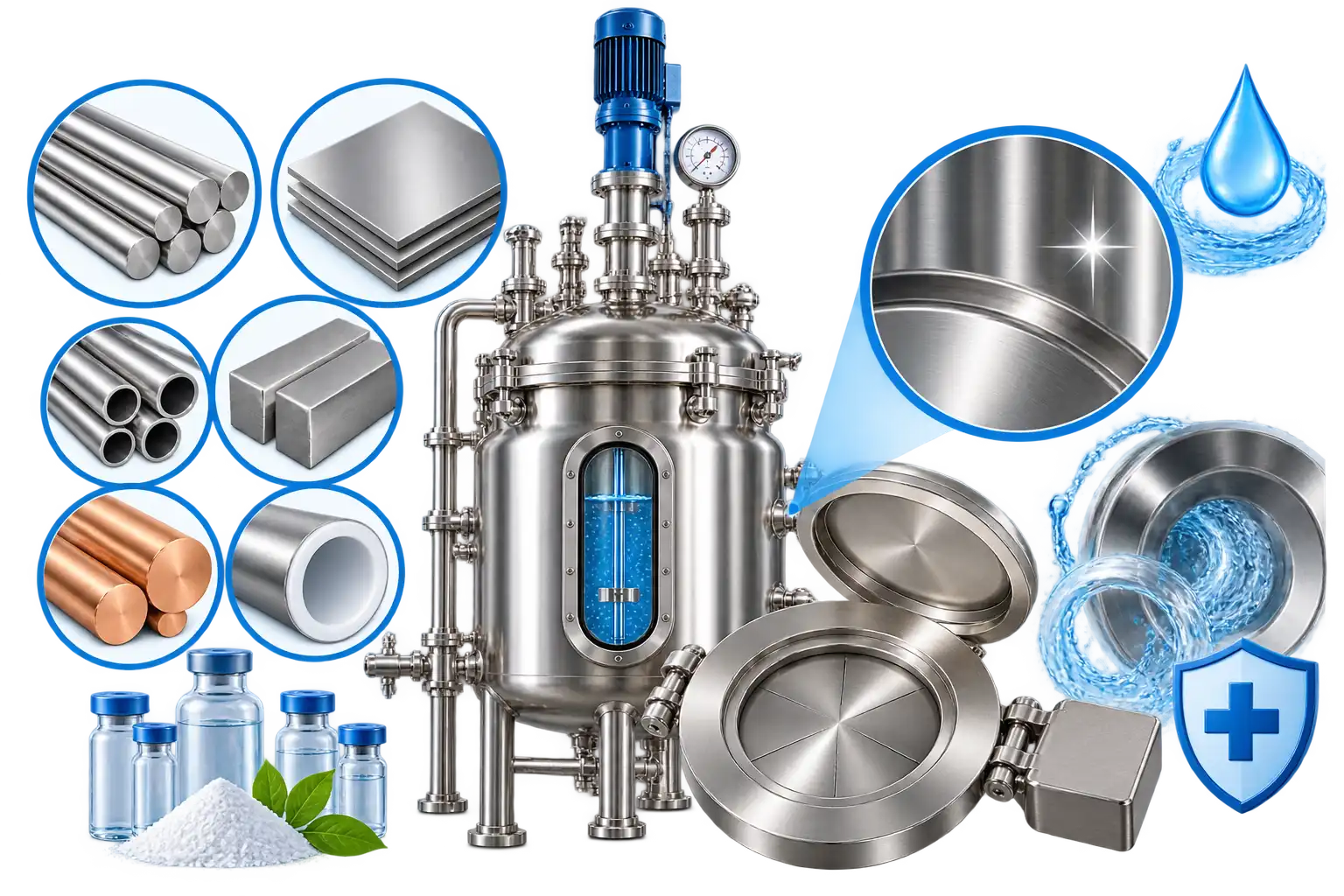
Material selection for a pharmaceutical rupture disc must account for three factors: corrosion resistance against the process media, compliance with EU GMP and EHEDG hygienic design requirements, and compatibility with CIP/SIP cleaning agents (typically NaOH 0.5–2% and citric acid or peracetic acid at elevated temperatures).
| Material | Grade / UNS | Typical application | EU GMP suitable | Key limitation |
|---|---|---|---|---|
| 316L Stainless Steel | 1.4404 / S31603 | Standard pharma reactors, bioreactors, sterile tanks | ✔ Yes | Not suitable for concentrated HCl or hypochlorite |
| Hastelloy C-276 | 2.4819 / N10276 | API synthesis, strong acids, aggressive solvents | ✔ Yes | Higher cost; longer lead times in Europe |
| Inconel 625 | 2.4856 / N06625 | High-temp oxidising environments, speciality APIs | ✔ Yes | Very high cost; specialist fabrication required |
| Tantalum | R05200 | Highly corrosive media (HF, HCl, H₂SO₄) | ✔ Yes | Extremely high cost; limited burst pressure range |
| PTFE-lined stainless | 316L + PTFE | Chlorinated solvents, strong oxidising agents | ◑ Conditional | PTFE liner reduces burst pressure accuracy; fragment risk on burst |
Surface finish requirements in Europe
The EU GMP and EHEDG standards are explicit: all product-contact surfaces must be smooth, non-porous, and cleanable without dead legs or crevices where microbial biofilm can form. For rupture discs in sterile pharma, this translates to:
- Wetted surface roughness: Ra ≤ 0.8 µm (electro-polished), preferably Ra ≤ 0.4 µm for sterile injectable manufacturing
- Passivation: Electrochemical passivation per ASTM A967 or EN ISO 16048 to remove free iron and maximise chromium oxide layer
- No dead legs: The disc holder geometry must allow full drainage without pooling — specify "zero dead leg" or "hygienic holder" design
- Weld-free wetted surfaces: Where possible, avoid internal welds on disc holders that contact the process stream
6. CIP/SIP compatibility — the most overlooked requirement
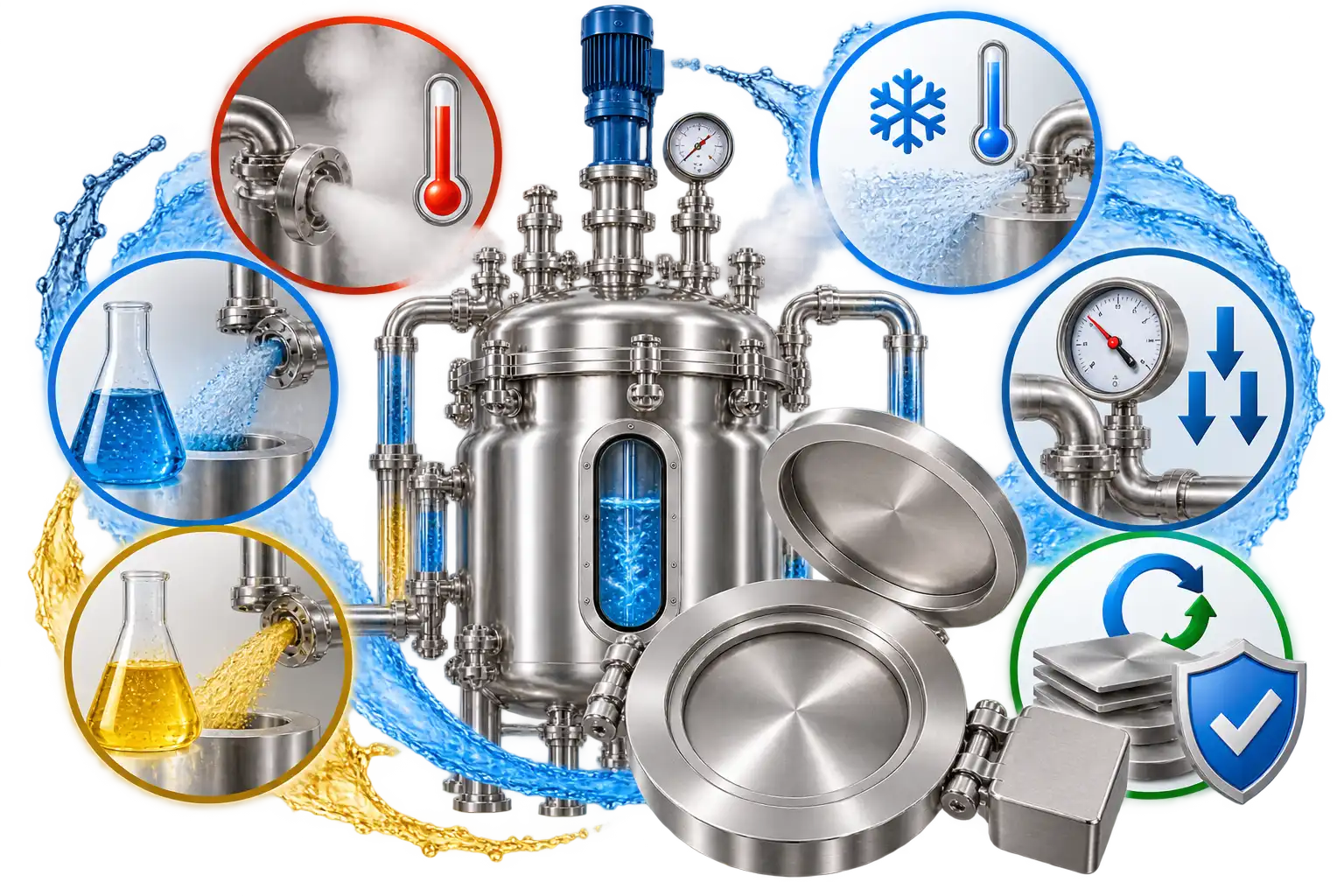
European pharmaceutical engineers frequently discover CIP/SIP incompatibility issues after installation — typically during the first IQ/OQ/PQ validation cycle. A rupture disc that is not CIP/SIP-rated will either burst prematurely during steam sterilisation, or show accelerated fatigue cracking after 20–50 CIP cycles, leading to a maintenance event that halts production.
When specifying CIP/SIP-compatible rupture discs for European pharma plants, ensure the following are tested and certified by the manufacturer:
- Steam sterilisation at 134°C, 3 barg, minimum 500 cycles without burst
- Resistance to 2% NaOH (hot) and 0.5% peracetic acid at 80°C
- Thermal shock tolerance (rapid transition from 135°C to 20°C in <15 minutes)
- Full-vacuum resistance during cool-down phase (rated to at least -1 barg / full vacuum)
- Operating ratio maintained ≥90% of minimum burst pressure after 500 CIP cycles
7. Combining rupture discs with safety relief valves in pharma
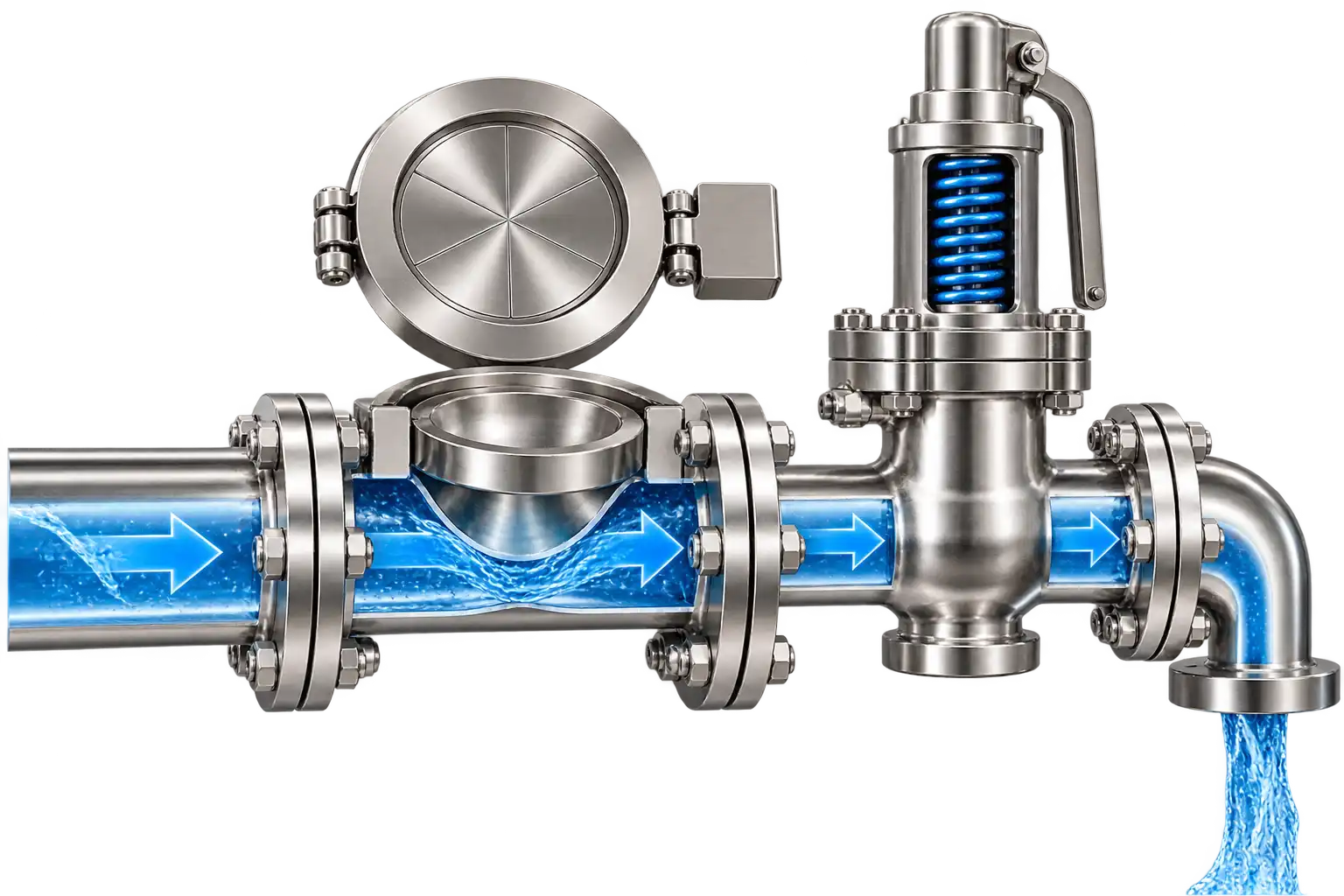
EN ISO 4126-3 permits and often recommends combining a rupture disc upstream of a safety relief valve in pharmaceutical pressure systems. This combination provides dual-layer protection while solving a common valve problem: product crystallisation or corrosive media fouling the valve seat, preventing proper sealing between process cycles.
| Scenario | Recommended device | Rationale |
|---|---|---|
| Single overpressure event expected (process upset) | Rupture disc alone | Lower cost; simpler validation; disc bursts once and is replaced |
| Repetitive minor overpressure events possible | Safety relief valve alone | Valve reseats after each event without replacement |
| Corrosive or crystallising media + overpressure risk | Rupture disc upstream + safety relief valve | Disc protects valve seat from media; valve provides backup relief |
| Sterile process + contamination prevention | Rupture disc as primary barrier | Disc provides zero-leakage containment; valve can contaminate if seat fails |
| Vacuum + pressure dual risk (bioreactor) | Vacuum-rated reverse-acting disc + breather valve | Disc handles overpressure; breather valve prevents vacuum collapse |
8. Sizing and burst pressure: what European buyers must specify

Rupture disc sizing in Europe follows EN ISO 4126-2 methodology, which differs from US API 520/521 practice in several important ways. The key parameters to define and document for your purchase specification are:
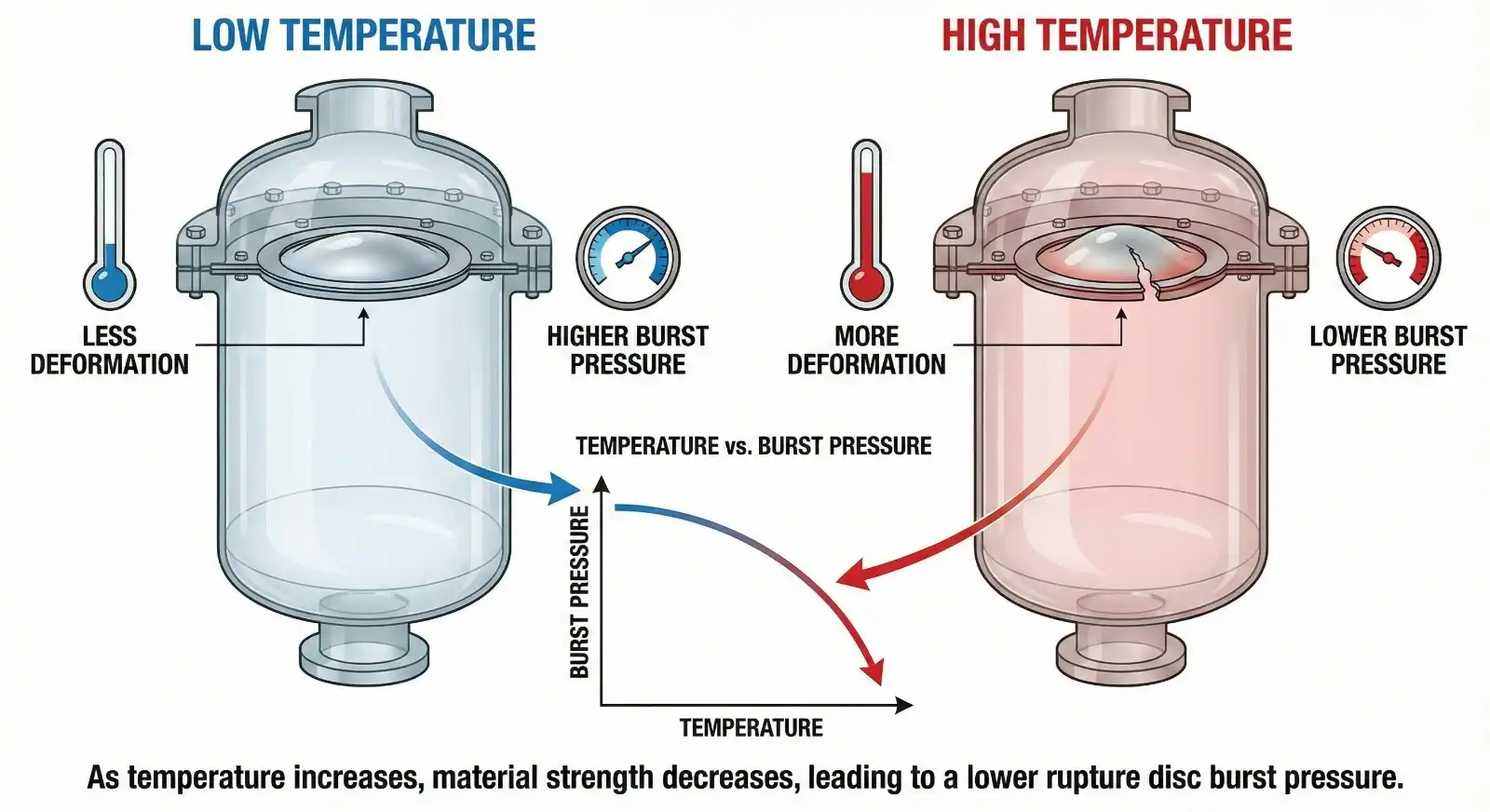
- Set burst pressure (Pb): The pressure at which the disc bursts at the specified disc temperature. State in barg (gauge) or bar absolute, and the reference temperature in °C.
- Manufacturing design range (MDR): EN ISO 4126-2 requires the actual burst pressure to fall within ±5% of the marked burst pressure at the specified temperature.
- Operating pressure ratio: Maximum operating pressure expressed as a percentage of the minimum burst pressure. For reverse-acting discs: up to 100% in the EU. Do not use US-standard 90% ratio unless specifically negotiated.
- Required relieving capacity (Qreq): The mass or volumetric flow rate the disc must pass after bursting, calculated per EN ISO 4126-2 using the certified coefficient of discharge (Kd) for the specific disc geometry.
- Connection size (DN): Nominal bore in mm per EN 1092-1 or ISO 6708. Select disc diameter to achieve required Kd × A (effective flow area).
- Back pressure: Pressure downstream of the disc at the moment of burst — affects flow capacity and must be below 50% of burst pressure for critical flow conditions (compressible gas) or specified for liquid service.
9. Country-specific notes for 35 European markets

While PED 2014/68/EU creates a harmonised framework, individual European countries maintain additional national regulations, preferred standards, and notified body requirements that pharmaceutical buyers must navigate:
| Country / Region | Additional requirements / notes |
|---|---|
| Germany | BetrSichV (Betriebssicherheitsverordnung) — operating safety regulation requires inspection of pressure equipment by authorised bodies (ZÜS). TÜV or DEKRA inspection common. DGUV rules apply for operator qualification. |
| United Kingdom | Post-Brexit: UKCA marking required (replaces CE). Pressure Systems Safety Regulations (PSSR 2000) apply. UK pharma buyers often also require MHRA GMP compliance documentation. |
| Switzerland | PED equivalent: Druckbehälterverordnung (DBV). CE marking recognised but Swiss ASTRA/METAS documentation may also be required. Major pharma clusters in Basel (Roche, Novartis), Zug, Zurich. |
| France | DREAL inspection authority. ESP (Équipements Sous Pression) regulations align with PED. Periodic inspection intervals mandatory for Category III/IV equipment. |
| Ireland | Strong biopharma cluster (MSD, Pfizer, Bristol Myers Squibb, Amgen). HPRA GMP oversight. Emphasis on FDA 21 CFR Part 11 and ICH Q10 for validation documentation alongside EU requirements. |
| Belgium & Netherlands | Major generic pharma and biotech clusters. FAMHP (Belgium) / IGJ (Netherlands) oversight. EHEDG certification often contractually required for API and biologics production. |
| Scandinavia (SE, DK, NO, FI) | CE marking universally required. Norwegian pharma installations require Petroleum Safety Authority (PSA) compliance for solvent-heavy processes. Nordic pharmaceutical standards are among the strictest in Europe. |
| Italy & Spain | ISPESL (Italy) / ENAC (Spain) accreditation bodies. Strong generics manufacturing sectors. CE marking and PED compliance non-negotiable. |
| Eastern Europe (PL, CZ, HU, RO, SK) | Rapidly growing pharma manufacturing sector. Full PED compliance required. Polish UDT (Office of Technical Inspection) provides pressure equipment certification in Poland — one of the largest pharma manufacturing nations in Central Europe. |
Ventil's Pharma-Grade Rupture Disc Range
Our SRDH, FAD, CRD, and SRD-SF series rupture discs are available in 316L and Hastelloy with electro-polished finishes, PED CE marking, EN 10204 3.1 material certificates, and full EU GMP documentation packs — ready for IQ/OQ/PQ validation in European pharmaceutical plants.
10. Ventil's pharma-grade rupture disc range
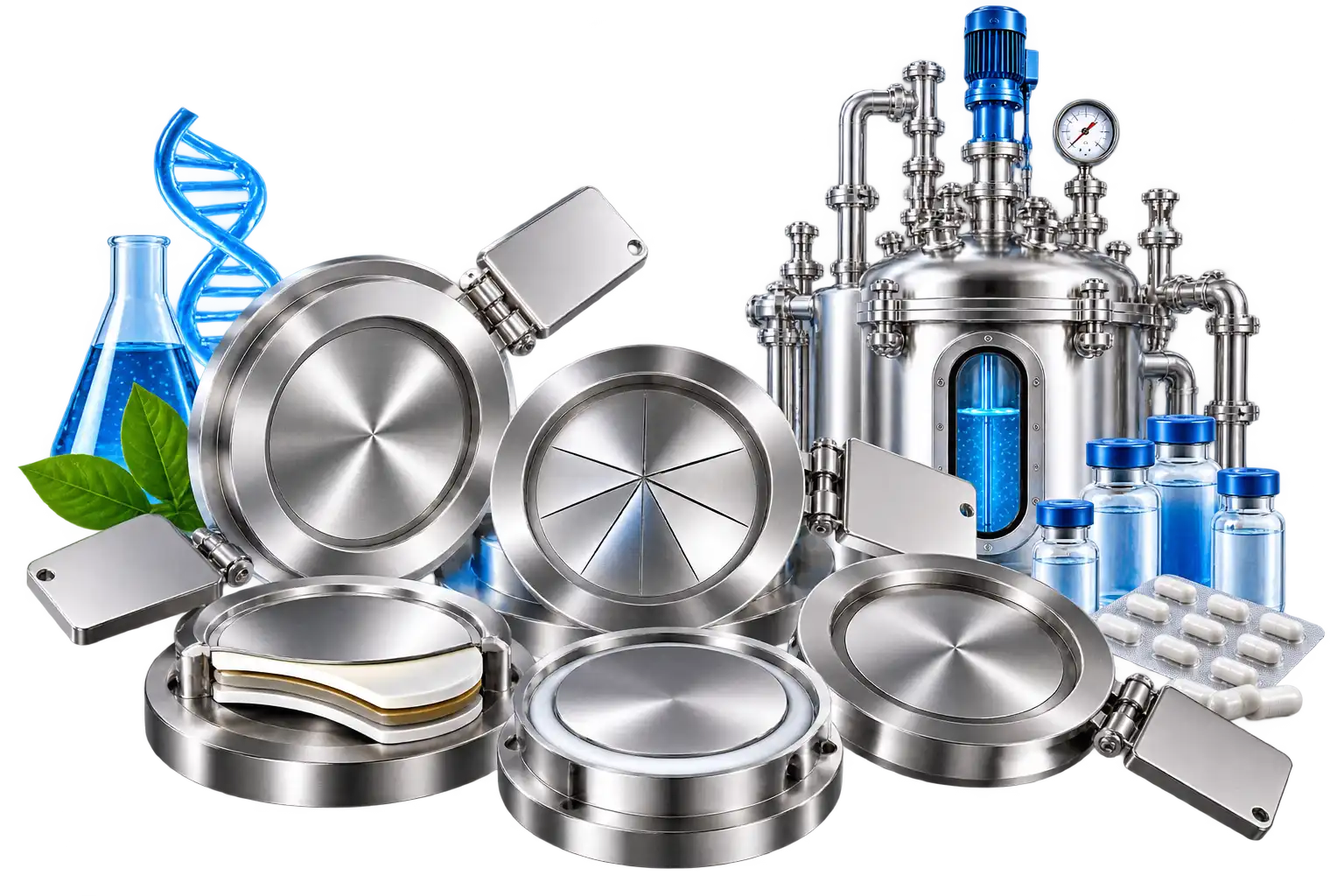
Ventil Components Pvt. Ltd. supplies a comprehensive range of rupture discs engineered for pharmaceutical and biotechnology applications in European markets. All products are available with full EU GMP documentation, EN ISO 4126-2 certification, and PED-compliant CE marking through our European authorised representative.
| Model | Type | Pressure range | Materials | Pharma suitability |
|---|---|---|---|---|
| SRDH | Reverse-acting, non-fragmenting | 0.1 – 40 barg | 316L, Hastelloy C-276, Inconel | ✔ Bioreactors, reactors, sterile vessels |
| FAD | Forward-acting, scored | 0.2 – 100 barg | 316L, Hastelloy, tantalum | ◑ Non-sterile API synthesis |
| CRD | Composite multi-layer | 0.05 – 60 barg | 316L + PTFE liner / Hastelloy | ✔ Corrosive solvent applications |
| SRD-SF | Sanitary / hygienic design | 0.1 – 16 barg | 316L electro-polished Ra ≤0.4µm | ✔ Sterile injectable, biotech, GMP Grade A |
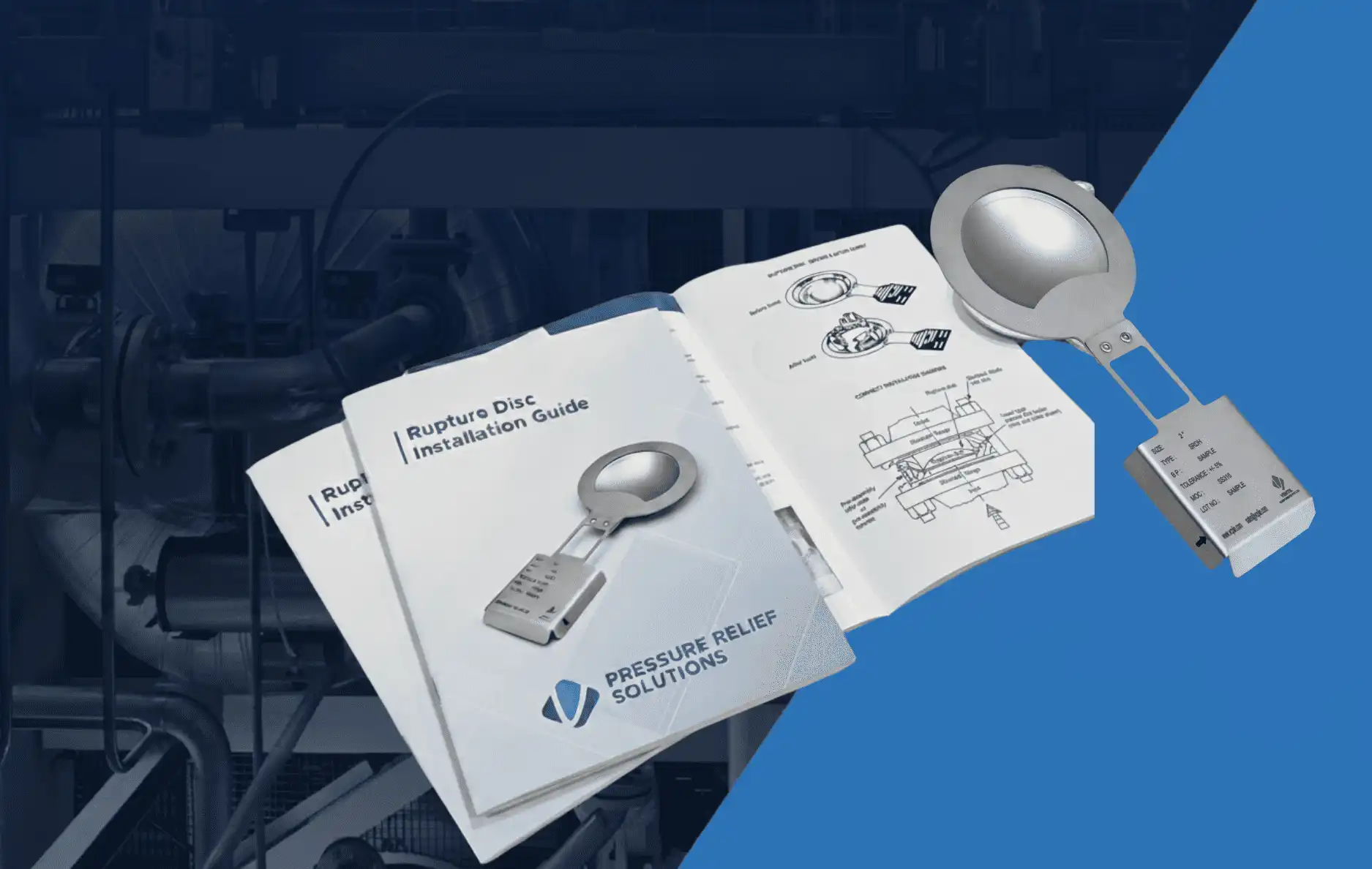
All Ventil rupture discs for European pharmaceutical customers are supplied with: EN 10204 3.1 material certificates, burst pressure test certificate per EN ISO 4126-2, surface finish (Ra) measurement report, EU Declaration of Conformity (PED 2014/68/EU), and batch traceability documentation suitable for IQ/OQ/PQ validation.